
Homepage
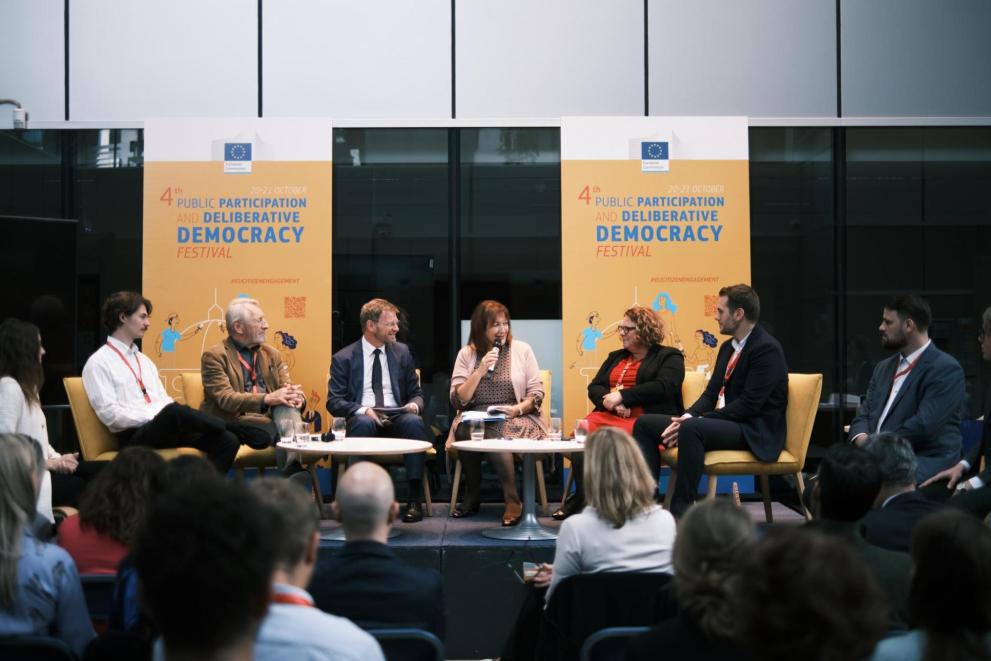
Welcome
The Competence Centre on Participatory and Deliberative Democracy aims to respond to the increasing demand from the European Commission, EU institutions and countries for capacity to support participatory and deliberative projects and policies at the EU level.
This web platform aims to support the activities of the Community of Practice by providing a space for sharing experiences and recommendations regarding different methodologies to engage citizens. Moreover, the web platform is itself a place of reflexivity on participatory methodologies and governance. It can also be used as a working space to design citizen participation in science and policy making.
Addressing pollinators decline – a citizen engagement toolkit
Since 2019, the Competence Centre on Participatory and Deliberative Democracy has been working together with the Directorate-General for Environment to strengthen the engagement of citizens in addressing the decline of wild pollinating insects, one of the critical problems of the biodiversity crisis. The main outcome of this activity is the citizen engagement toolkit including materials and guidelines for anyone who wants to organise a participatory process on the topic of pollinators’ decline and biodiversity.
This work also supports the design and implementation of the Young Citizens Assembly on Pollinators.


Training for local, regional and national public administrations and future trainers
The training on citizen engagement for public administrations and future trainers is afoot. The training is free and open to public officials, civil servants and other government professionals working in local, regional and national public administrations, and to future trainers. Participants can choose among three levels of competence: basic; advanced; and train-the-trainer.
Young Citizens Assembly on Pollinators
Wild pollinating insects such as solitary bees, bumblebees, wasps, hoverflies, butterflies, moths, and other flies are much more important for human societies and nature than their tiny sizes would suggest. Around 4 in 5 crops and wild flowering plants rely on pollinators to transfer pollen and help them reproduce. Insects are also important for pest control and soil health as well as being a necessary part of the food chain.
As our lives are deeply entwined with the fate of pollinators, decisions on what to do should be a subject of a wide public debate. Throughout the next several months, this platform will let citizens from across Europe exchange their views and experiences on the decline on pollinating insects to create a truly interactive space of debate.
Everyone is also welcome to contribute reflections on ideas already shared. This way we can take into consideration the widest possible set of concerns, needs and perspectives.


