
Toolkit blueprint on collaborative interventions
About
In a nutshell...
This is a blueprint for a workshop that brings together different groups of citizens to build mutual understanding and develop collaborative interventions for pollinators. The activities use many popular and creative formats such as a picnic and an art exhibition to explore the topic from unusual angles, while co-design uses a board game.
Purpose & objective: Who doesn’t care about food?!
An important thing about co-creation is bringing together different groups that are concerned about an issue but which might not normally interact much. Through this, you bring to the table a diversity of perspectives, ideas and concerns that might diverge, thus immediately addressing potential tensions and trade-offs as well as increasing the scope of creativity. This blueprint describes a process in which citizens and farmers come together to explore and discuss the topic of pollinators decline in relation to food production to develop collaborative interventions. After all, farming is one of the areas most affected by – and affecting – the decline of pollinators. However, while both citizens and farmers have high stakes in this, they rarely directly interact. Consequently, the activities described here helped to consolidate or rebuild a community around the shared interest in food, raise awareness about the role of pollinators in food production and establish actionable collaborations. While this was the idea for the original project, the plan presented here can work for other topics and other groups. To make the narration easier, we will follow in the description below on the original focus.
Format: Work with well-known types of activities!
Different parts of the event follow well-known and popular activities: photo exhibition, picnic, playing board games. Thanks to this, even if the topic of pollinators is foreign to the participants, they can more easily understand what will be happening and feel more at ease. The activities run in this process use extensively artistic practices to explore the topic from unusual angles and trigger creative thinking.
| 10-30 participants | 1 day long | In-person |
|---|
Preparations
Recruitment: Ask for help those who know best!
As this process requires engagement of a very specific group of citizens – farmers – it requires both targeted recruitment and collaboration with local reference persons. These are individuals that are well-known and respected in their community, who also have extensive knowledge and connections, thus being able to help you reach out to a wider number of farmers. To work with such person, who puts their reputation at stake to support you, requires a lot of trust, which might take time to build. As an organiser, be ready to travel extensively to meet all the farmers in person. Importantly, as participation requires extensive effort on the part of farmers, they should be remunerated. For the recruitment of citizens you can use either sortition – if you want to gather a representative group from a given area – or also targeted recruitment – if you want to focus on specific groups of citizens, e.g., those who use local farmers’ market.
Timing: Are the pollinators out there?
This event needs to take place during the time of the year when pollinators are most active, during spring and summer. To take into consideration the time limitations of farmers, it might be good to set it during religious holidays, which are often the only times during that period when farmers do not work in the fields.
Team & partnerships: Don’t try this on your own!
To set up and carry out such a diverse programme of activities requires a lot of particular expertise and hence a broad network of collaborators - including institutions, scientists and artists. When you start such collaborations, it is good to think about why this might be interesting for your partners.
Location: Go where it all begins!
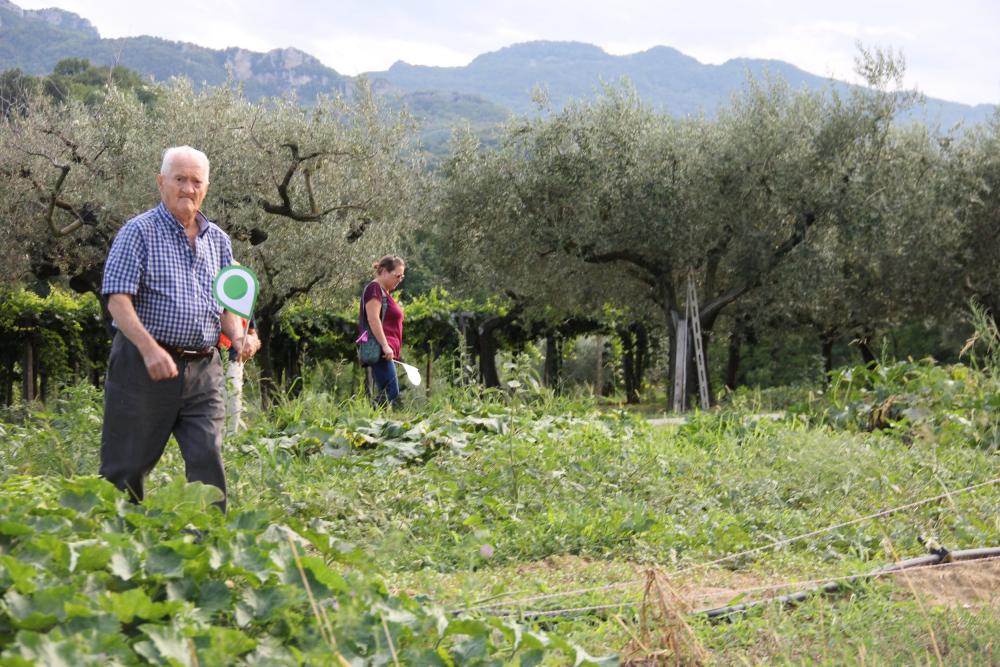
All the activities of this process take place on a farm. This allows participants (especially the ‘regular’ citizens) to see fist-hand farming practices and the impacts they have on pollinators. But it becomes also an opportunity for farmers to learn more about pollinators and discuss with experts. The farmers, who act as hosts and present their farm, are also seen as experts.
Event roll-out
Noticing: Collect experiences! (a-synchronous)
Before the event starts, participants, including farmers, are asked to take photos in their daily life, of things and experiences that in some way relate to pollinators and food – ideally both of these together but not necessarily. Through this ‘homework’, a visual archive of their experiences, practices and knowledge around the topic can be developed, revealing different perspectives between citizens and farmers, as reflected in the types of pictures taken. Occasionally, you might have to remind participants about taking photos and send them suggestions and inspirations. Participants, in turn, directly send back the photos through a messaging application to the organiser. As the pictures are later used to create a curated exhibition, you have to finish collecting them several days before the event.
Opening (1h)
On the day, as the event takes place on a farm, which might be difficult to reach, make sure that you have some activities for participants who have to wait until everyone arrives - and make sure beforehand that everyone has the means of arriving there. You should also send good guidelines on reaching the place and always have someone on standby in case some participants have difficulties with getting to the location.
Noticing: Guided tour (2h)
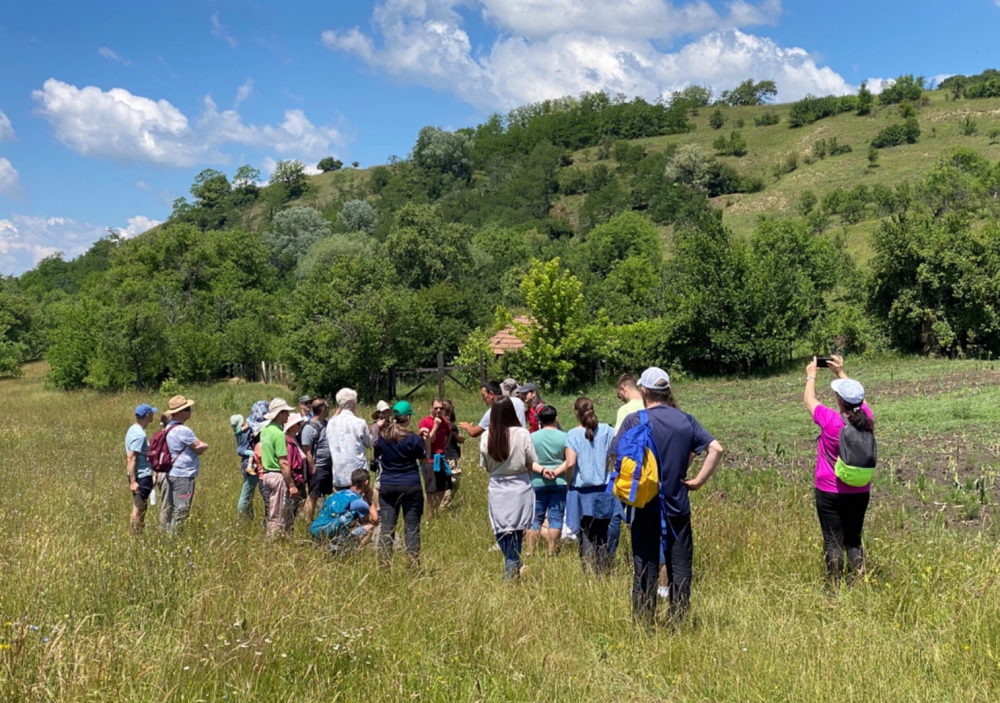
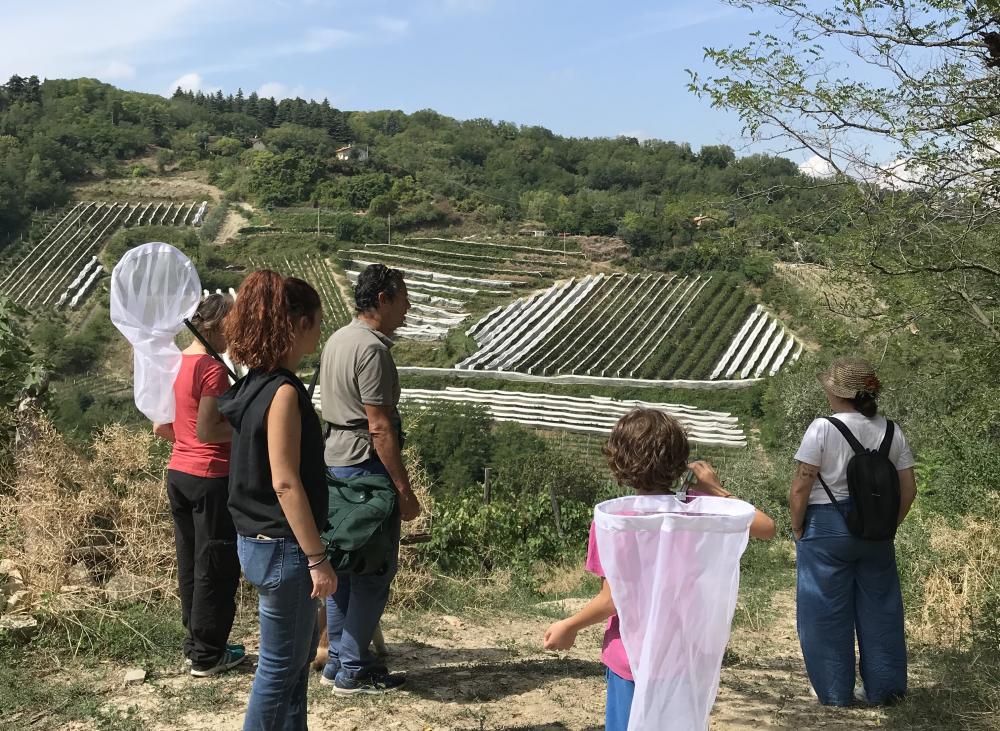
After the >introduction, participants leave on a >guided tour. Ideally, each group will be no larger than 15 people to make it manageable, i.e. everyone being able to hear the explanations and participate in the discussions. Participants are guided across the farm, where at different points they can hear and explore different aspects of farming practices, formal rules that it follows, the history of the place, the environment, pollinators, etc. The main guides here should be a farmer and an entomologist, but it can be very stimulating to include stories from others – e.g., seasonal workers, municipality representatives, food vendors, other scientists, farmers from neighbouring farms. With every stop, invite participants to ask questions and discuss what they heard.
Apart from discovering the farm and the different dimensions of the topic of food, the tour can also be the first time that participants get a chance to get close to pollinators.
Noticing & Taking care for your hive in one go: Invite participants to a meal to get to know each other better! (1.5 h)
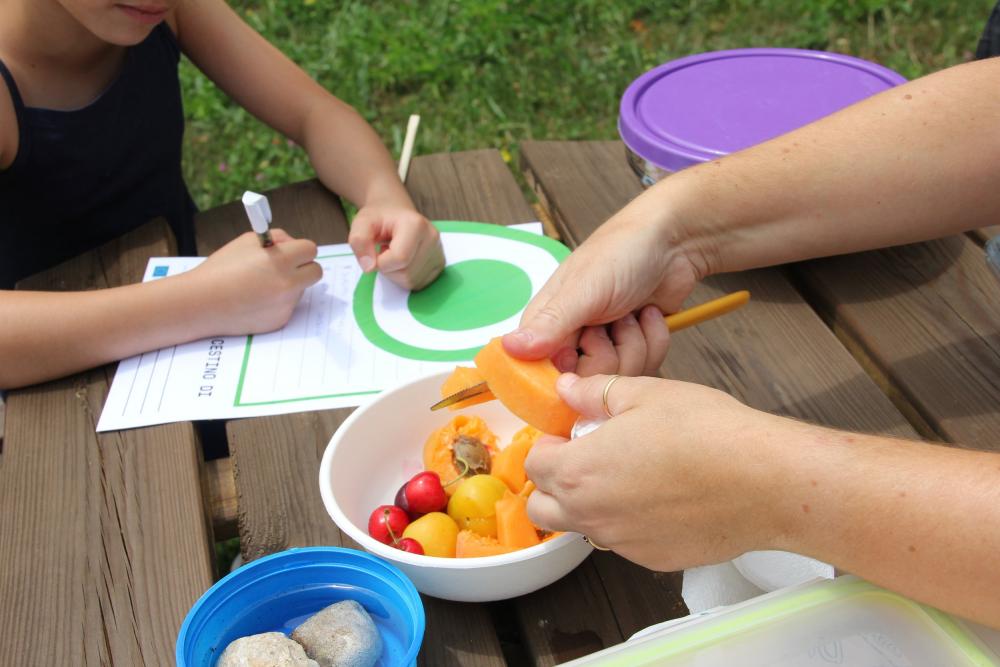
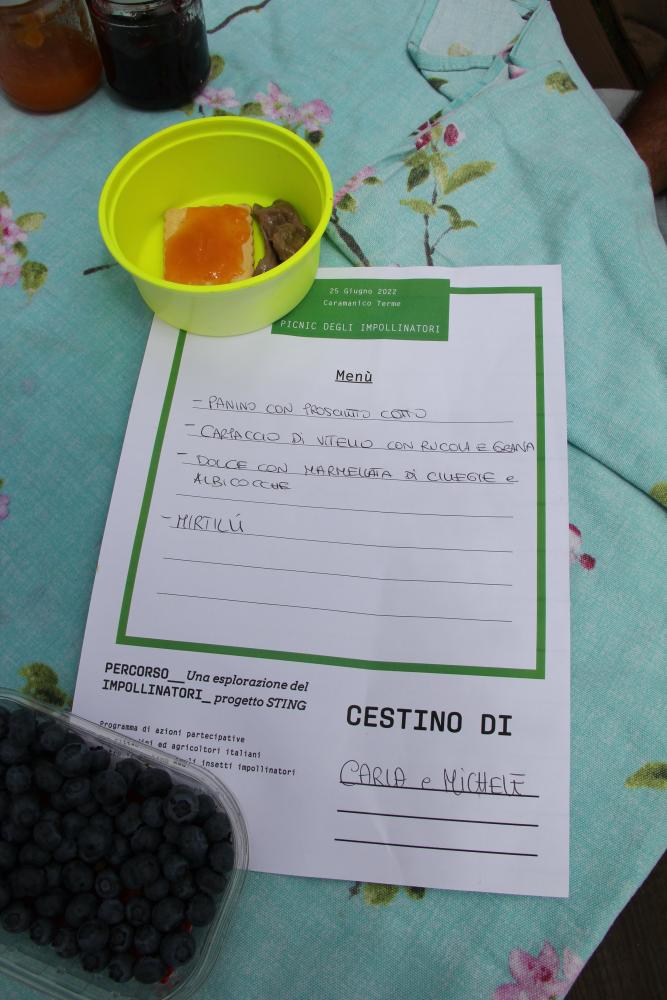
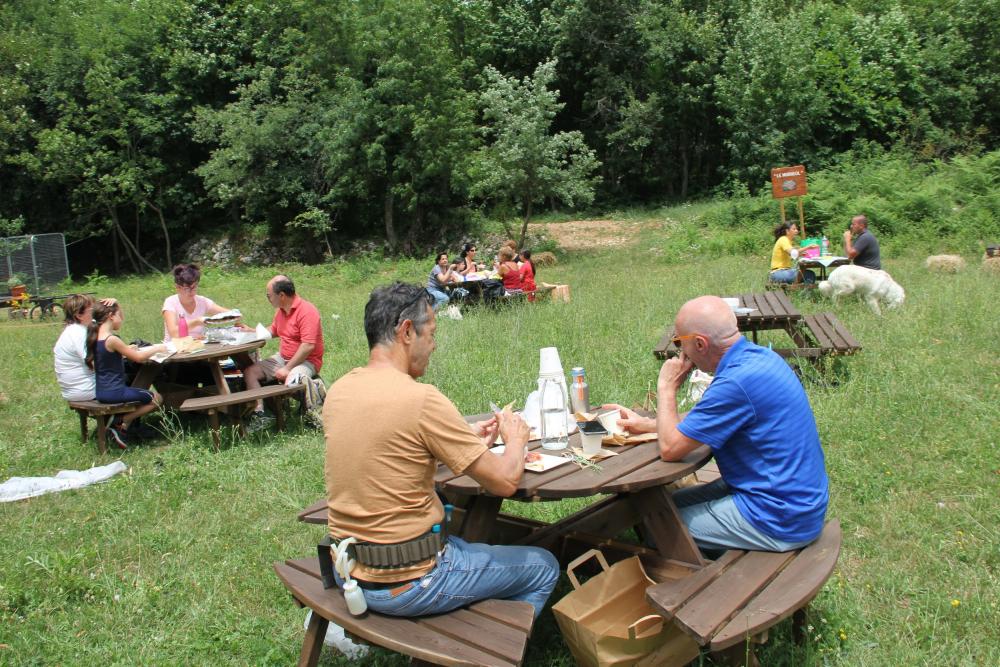
What better way to discuss food an pollinators then by sharing a meal… with pollinators. This is the idea behind the >pollinators picnic, where participants literally invite insects to the table to eat together. Additionally, eating together is a very powerful social ritual, so it’s a good way to further get to know each other. This is important for the next stages which include more substantial collaboration. Finally, it’s also an opportunity for the farmers to share some of their produce. Lunch directly after the guided tour also lets participants rest and recover energy before the more cognitively demanding work afterwards.
Sense making: Let others make sense of it! (0.5h)
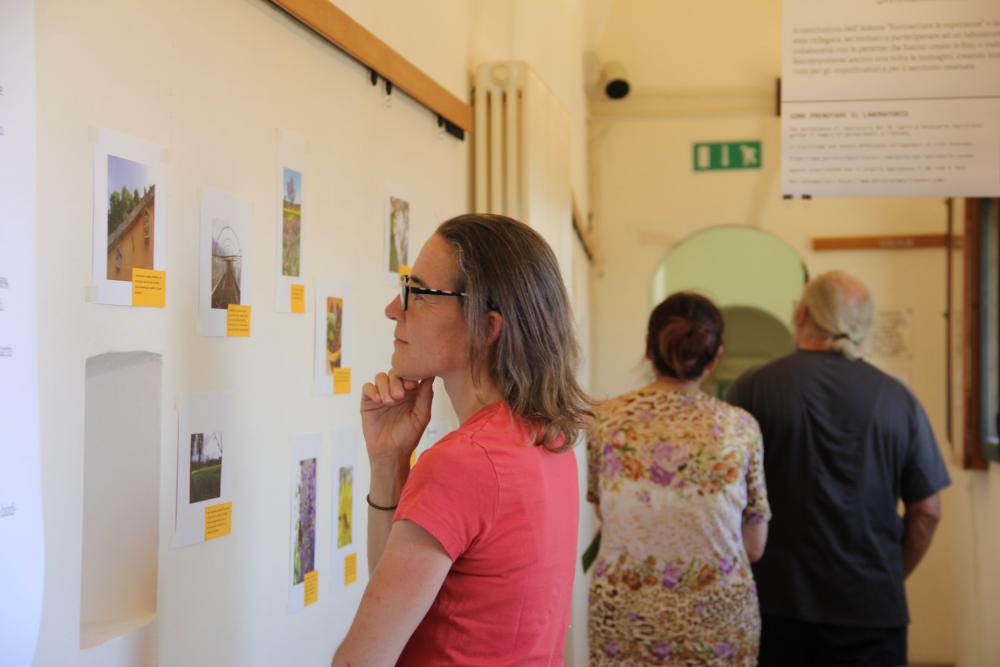
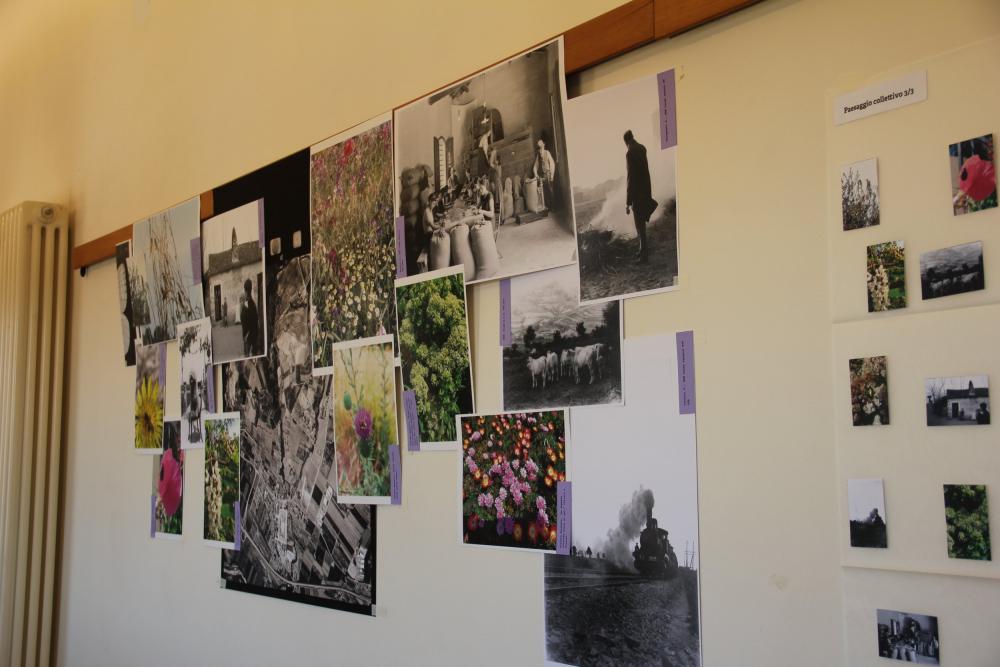
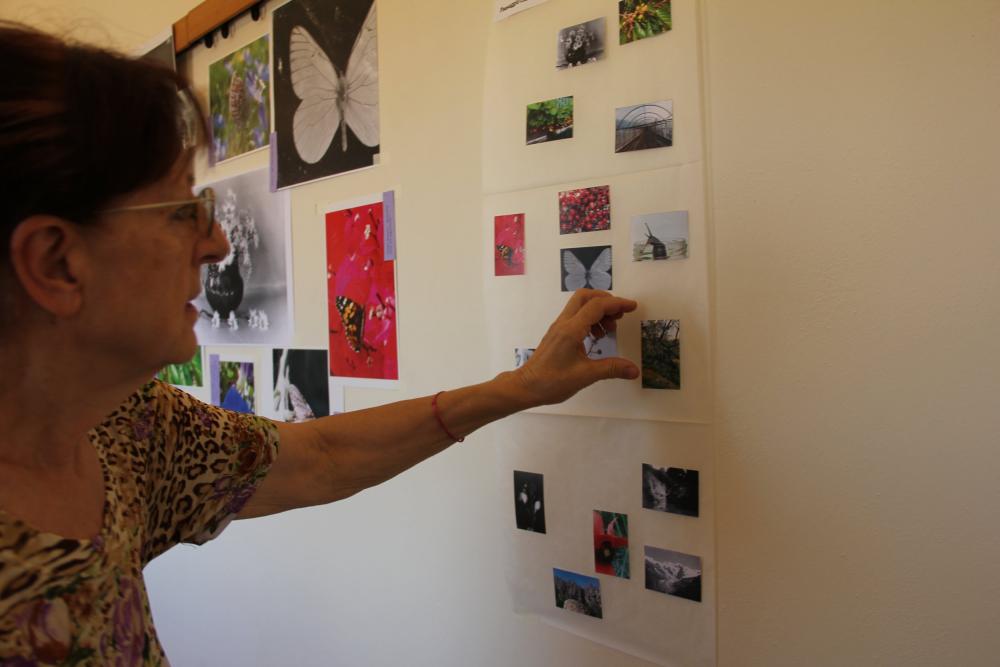
The afternoon starts with a photo exhibition consisting of two parallel paths – one curated by an entomologist and the other by an artist. The point is to have two sets of pictures, selected and organised by two very different experts, as such offering a different perspective on the topic. The exhibition can be displayed even on a barn wall – anything that offers a large enough and flat surface.
As after lunch participants might feel a bit heavy, this is an easy way to return to thinking more systematically and analytically about the topic. As the participants reflect and discuss, they are also invited to pick one picture which most attracts their attention – this will become the starting point for the co-design exercise.
Co-design: Imagine acts of care! (2-3h)
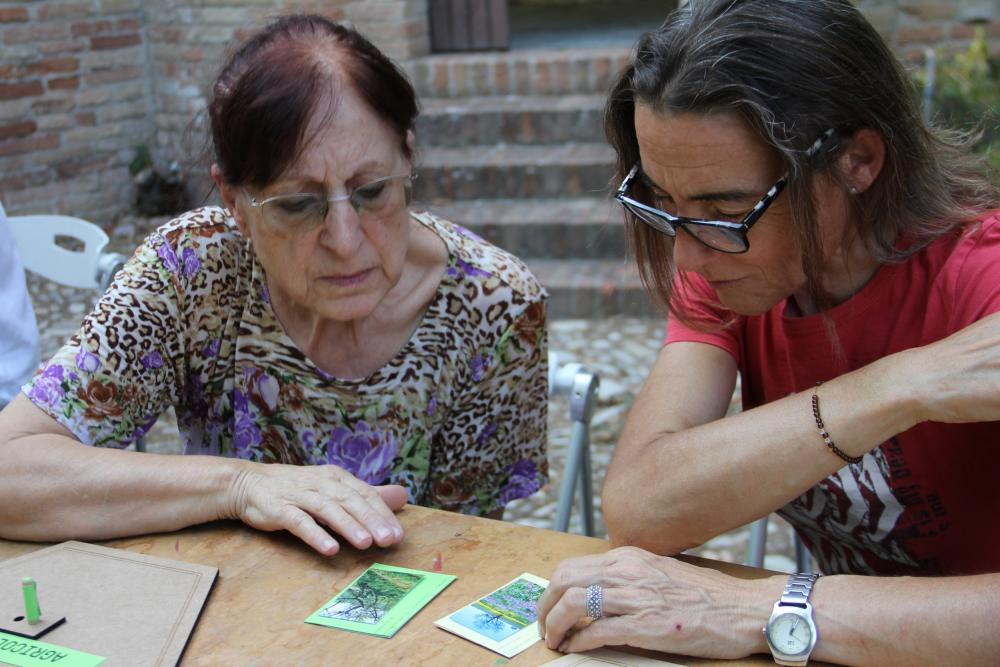
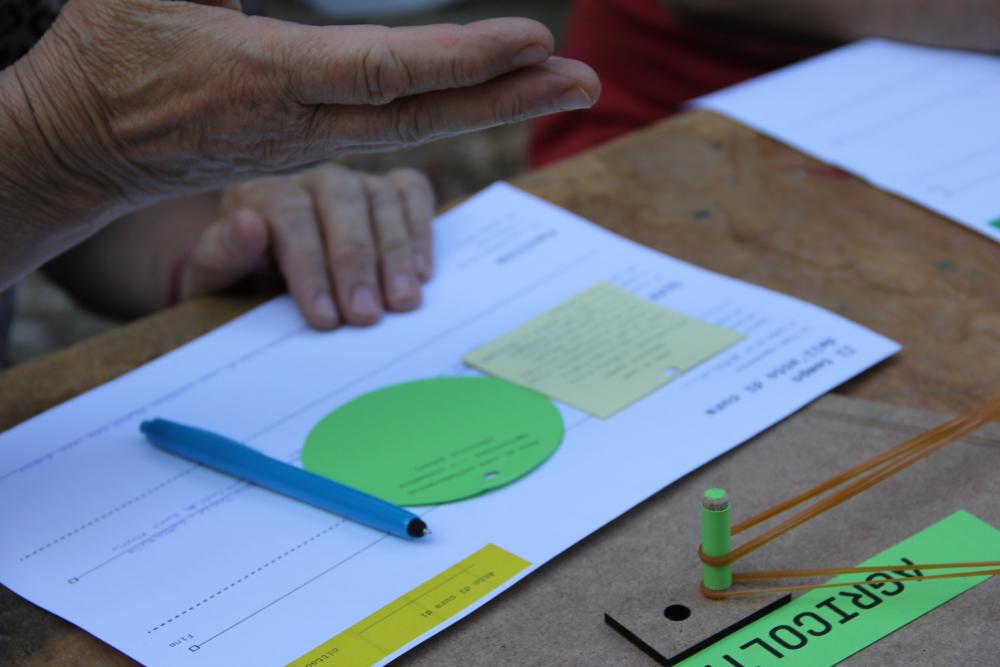
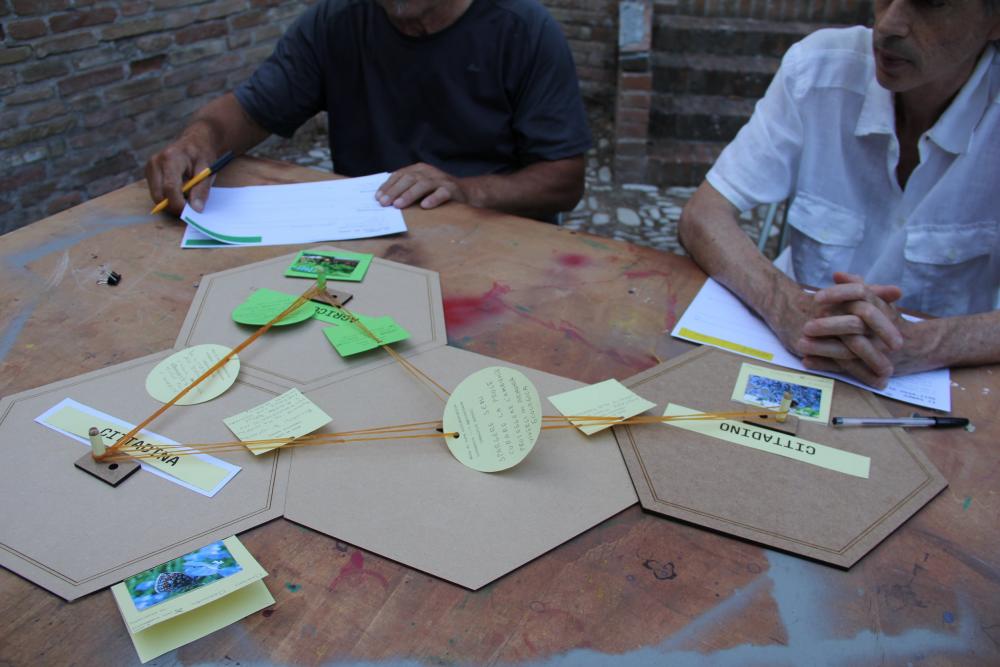
After everyone picks a picture, participants need to be divided into groups of between 3 and 6 people. Each group should be as diverse as possible and include at least one farmer. Next, participants make their way to separate tables, on which they find already prepared >Entanglement Tools and proceed with the activity, starting with the explanation of reasons for picking each picture, defining the act of care and then identifying the actions they can take to support each other. It might get messy, but that’s OK – the ‘entanglement’ is a metaphorical representation of the growing connections between the participants.
To further work out the possible actions, participants can continue with other co-design activities, like >prototyping or hacking. To ‘clean up’ the plan for action that emerged through the messy creativity of the Entanglement Tool, the canvas from >Theory of change exercise can be helpful. In this case, the starting point of the activity will be a daily practice, while the picture taken from the exhibition will become the description of the situation at the bottom of the canvas.
Closing: Share the ideas! (1h)
As participants will be working in small groups throughout the co-design phase, the final part of the workshop should be the >joint reflection, in which every group presents their ideas and gathers feedback from others.
Credits
This blueprint is based on a series of workshops titled 'Percorso Impollinatori', developed and implemented by researcher and designer Laura Boffi during summer 2022 in Italy. The original workshops involved additional art- and technology-based activities, including a theatre performance and a prototype of biodiversity monitoring robot. The performance became the basis for the development of a graphic novel titled Bye, Bye Robot, which provides an introduction to the topic of pollinators. With time, we will include also other parts of this original design in this toolkit.
All photographs ©Laura Boffi.